
How AI Is Changing Digital Marketing in 2026
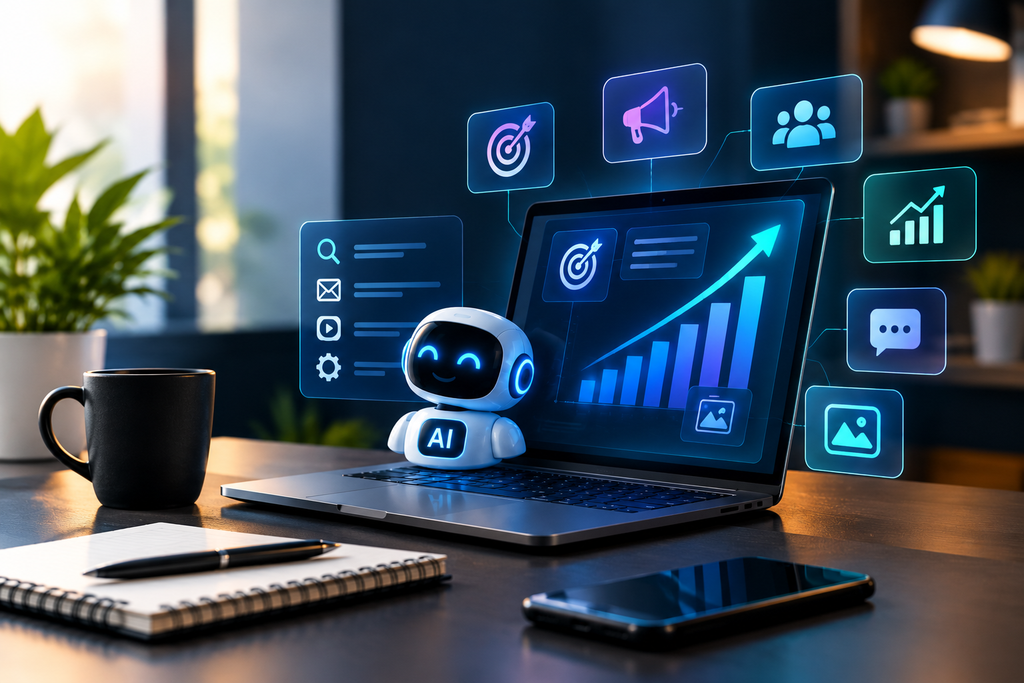
How AI is changing digital marketing in 2026
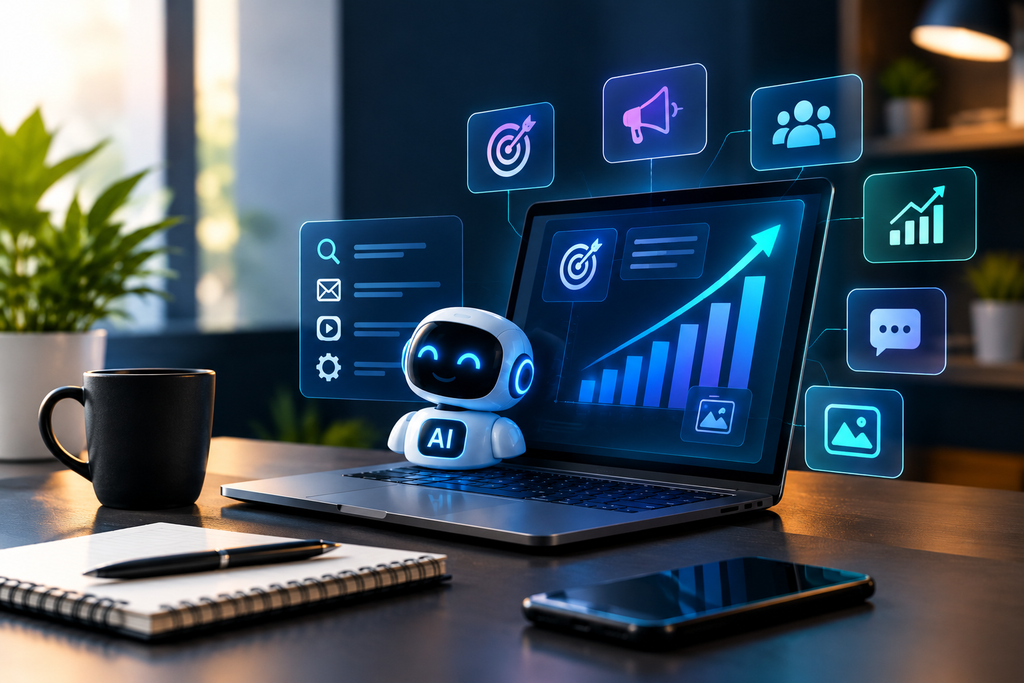
AI in digital marketing is transforming how businesses create content, improve SEO, analyze customer behaviour, and manage advertising campaigns in 2026. AI-powered tools help digital marketers save time, understand their target audience, and develop smarter marketing strategies. By combining AI technology with human creativity, businesses can improve their online presence and deliver better customer experiences.
Today, digital marketers are using AI-powered tools to save time, understand their audiences, and create more personalized customer experiences. However, AI is not simply about automation. It is about combining technology, creativity, and human decision-making to achieve better marketing results.
In this blog, we will explore how AI is changing digital marketing, its major benefits, popular applications, and how businesses can use it effectively.
What Is AI in Digital Marketing?
AI in digital marketing refers to the use of artificial intelligence technologies to analyze data, automate repetitive tasks, understand customer behaviour, and improve marketing strategies. Marketers can also learn about creating helpful content from Google Search Central’s helpful content guidance.
AI-powered tools can help marketers generate content ideas, identify relevant keywords, analyze campaign performance, create audience segments, and provide personalized recommendations.
For example, a digital marketer can use AI tools such as ChatGPT to brainstorm blog topics, research customer questions, draft social media captions, and identify opportunities to improve a website’s SEO.
AI tools can support these activities, but marketers should review the output for accuracy, originality, brand consistency, and usefulness before publishing it.
1. AI Is Transforming Search Engine Optimization (SEO)
Search Engine Optimization is an essential part of digital marketing because it helps businesses improve their visibility in search engine results.
AI is changing SEO by helping marketers understand search intent, organize keywords, analyze content, and identify opportunities to answer users’ questions more effectively.
Some ways AI can support SEO include:
- Keyword research: Discover relevant keyword ideas and related search questions.
- Content optimization: Identify missing topics and improve the structure of existing articles.
- Search intent analysis: Understand whether users are looking for information, products, or services.
- Content planning: Build topic clusters and plan related blog posts.
Google’s search experience is also evolving with AI-powered features. However, Google’s guidance continues to emphasize helpful, reliable, people-first content rather than content created solely to manipulate rankings.
The best approach is to use AI to support research and planning while adding original insights, accurate information, and genuine value for readers.
2. AI Is Making Content Creation More Efficient
Content marketing requires consistent planning, writing, editing, and publishing. AI tools can make several of these tasks faster.
Digital marketers can use AI to develop blog outlines, generate content ideas, draft email campaigns, write social media captions, and create video scripts.
For example, a digital marketer working with a clothing brand could use AI to brainstorm seasonal campaign ideas, prepare caption variations, and plan a monthly content calendar.
However, publishing unedited AI-generated content can result in repetitive or inaccurate information. Every draft should be reviewed, fact-checked, and improved with relevant examples and the brand’s unique perspective.
The goal is not to publish more content at any cost. It is to create better content more efficiently.
3. AI Is Improving Social Media Marketing
Social media marketing involves understanding audiences, publishing engaging content, responding to customers, and measuring performance.
AI can support these activities by helping marketers identify content ideas, analyze engagement patterns, prepare captions, and organize publishing schedules.
For example, a small business can use AI to develop different content ideas for Instagram, Facebook, and LinkedIn while adapting the message to each platform’s audience.
AI can also help marketers summarize customer feedback and identify recurring questions or concerns.
Still, successful social media marketing requires authentic communication. Human creativity, brand personality, and genuine interaction remain important for building trust with an audience.
4. AI Is Making Advertising Campaigns Smarter
Paid advertising platforms increasingly use AI and machine learning to support targeting, bidding, creative optimization, and campaign performance analysis.
In Google Ads, for example, AI-powered campaign features can help advertisers discover relevant searches and optimize campaign delivery based on their goals and available data.
Digital marketers can use AI to:
- Generate and test different advertising messages.
- Analyze campaign performance and identify trends.
- Develop audience and customer research ideas.
- Improve creative variations for different marketing channels.
- Make better-informed decisions about campaign optimization.
AI does not guarantee successful advertising. Results still depend on campaign objectives, audience relevance, creative quality, landing page experience, tracking, and budget management.
Marketers should monitor performance regularly and ensure that automated decisions align with business goals.
5. AI Enables Personalized Customer Experiences
Customers are more likely to engage with messages and offers that match their needs and interests.
AI can help businesses personalize marketing by analyzing relevant customer interactions, preferences, and behaviour patterns.
Examples include personalized product recommendations, tailored email campaigns, automated customer support, and relevant follow-up messages.
For instance, an online store may recommend products based on a customer’s browsing activity or previous purchases, where appropriate permissions and privacy requirements are met.
Personalization can make marketing more relevant, but businesses should use customer data responsibly, protect privacy, and avoid intrusive communication.
6. AI Helps Marketers Understand Data Better
Digital marketing generates large amounts of data through website visits, social media engagement, advertising campaigns, and customer interactions. Tools such as Google Analytics help businesses measure website and campaign performance.
AI-powered analytics tools can help marketers identify patterns, summarize performance, and investigate potential opportunities.
A marketer might use AI to compare campaign results, identify pages with declining engagement, or generate questions for further analysis.
These insights can help businesses make more informed decisions about their marketing strategies.
However, AI-generated analysis should be checked against reliable data. Correlation does not always mean causation, and marketers should not rely on automated conclusions without understanding the context.
Popular AI Tools for Digital Marketers
Different tools support different marketing activities. Here are a few examples:
- ChatGPT: Brainstorming, content outlines, research assistance, and marketing ideas.
- Google Gemini: Research assistance, idea generation, and content planning.
- Canva AI: Design assistance and creative content production.
- Semrush: SEO research, keyword analysis, and competitive insights, with AI-supported features.
- Google Analytics: Website and campaign measurement, with reporting and insight features.
Features and availability can vary by product and subscription. AI tools should complement a marketer’s skills rather than replace research, verification, or strategic thinking.
Benefits of AI in Digital Marketing
Using AI in digital marketing thoughtfully can provide several advantages:
1. Saves time: Automates or speeds up repetitive tasks such as drafting, summarizing, and organizing ideas.
2. Supports better decisions: Helps marketers explore patterns in campaign and audience data.
3. Improves personalization: Makes it easier to develop relevant messages for different audience segments.
4. Supports creativity: Provides alternative ideas for campaigns, headlines, visuals, and content formats.
5. Helps businesses scale: Enables small teams to manage more marketing activities without increasing every manual task.
These benefits depend on the quality of the tools, the data available, and how carefully marketers apply the results.
Challenges of Using AI in Digital Marketing
Although AI offers many opportunities, it also introduces challenges.
- Accuracy: AI can produce incorrect facts or misleading claims.
- Originality: Generic content may fail to distinguish a business from its competitors.
- Privacy: Customer data must be handled responsibly and in accordance with applicable requirements.
- Over-automation: Excessive automation can weaken brand personality and customer relationships.
- Human oversight: Marketing decisions still require context, creativity, and accountability.
Businesses should establish clear review processes and use AI responsibly instead of relying on it without supervision.
The Future of AI in Digital Marketing
AI will continue to influence how people discover information, how businesses communicate, and how marketing campaigns are managed.
Search experiences are becoming more conversational, marketing platforms are adding intelligent automation, and businesses are exploring more personalized customer journeys.
For digital marketers, the opportunity is to combine AI tools with strong fundamentals: SEO, content strategy, audience research, analytics, branding, and communication.
Marketers who learn how to use AI critically and creatively will be better equipped to adapt to changing customer expectations and marketing technologies.
Frequently Asked Questions
What is AI in digital marketing?
AI in digital marketing is the use of artificial intelligence to support tasks such as content creation, SEO, customer analysis, advertising optimization, and personalization.
How does AI help digital marketers?
AI helps digital marketers generate ideas, analyze data, organize campaigns, understand audiences, and reduce time spent on repetitive work.
Can AI replace digital marketers?
AI can automate certain tasks, but it does not fully replace human creativity, strategic thinking, communication, or accountability. Human oversight remains essential.
Is AI useful for SEO?
Yes. AI can assist with keyword research, search intent analysis, content planning, and content improvement. However, useful, original, and reliable content remains essential.
Which AI tools are useful for beginners in digital marketing?
Beginners can start with tools such as ChatGPT for brainstorming, Canva AI for design assistance, and Google Analytics for understanding website performance.
Conclusion
AI in digital marketing is making research, content creation, campaign management, and data analysis more efficient. It offers businesses new ways to understand customers and improve marketing strategies. To strengthen your online presence, explore the digital marketing resources and services on this website.
However, successful marketing still depends on creativity, accurate information, ethical practices, and a clear understanding of the audience.
For digital marketers, the best strategy is to treat AI as a powerful assistant, not a complete replacement for human expertise. By combining intelligent tools with thoughtful marketing decisions, businesses can build stronger customer relationships and create more meaningful digital experiences.
Ready to improve your digital presence? Explore the right digital marketing strategies for your business and start building a stronger online brand today.